Hive Streaming
Empowering Enterprise Video at Scale
In today’s video-driven corporate landscape, with distributed workforces and global events, an Enterprise Content Delivery Network (eCDN) is critical. It enables organizations to distribute high-quality, high-bandwidth live and on-demand video to thousands of employees without overwhelming internal networks.
The easiest way to deliver, understand, and improve live video.
Hive provides intelligent video distribution and analytics solutions that empower enterprises to deliver video at scale. While the technical solution was industry-leading, the user experience did not reflect the same level of excellence.
As Lead Designer, my goal was to elevate the platform to meet modern B2B standards — simplifying complexity, modernizing the interface, and aligning UX with Hive’s advanced technology.
1. Problem
Hive’s enterprise platform had evolved rapidly, but its UX and UI had not kept pace with the expanding product offering. Information architecture was inconsistent, workflows were fragmented, and overall design maturity within the organization was low.
Key challenges included:
Outdated UI and inconsistent UX patterns
Lack of accessibility compliance
Event insights that were difficult to interpret and act on
Missing features and friction in core workflows
Limited design processes and low UX maturity across teams
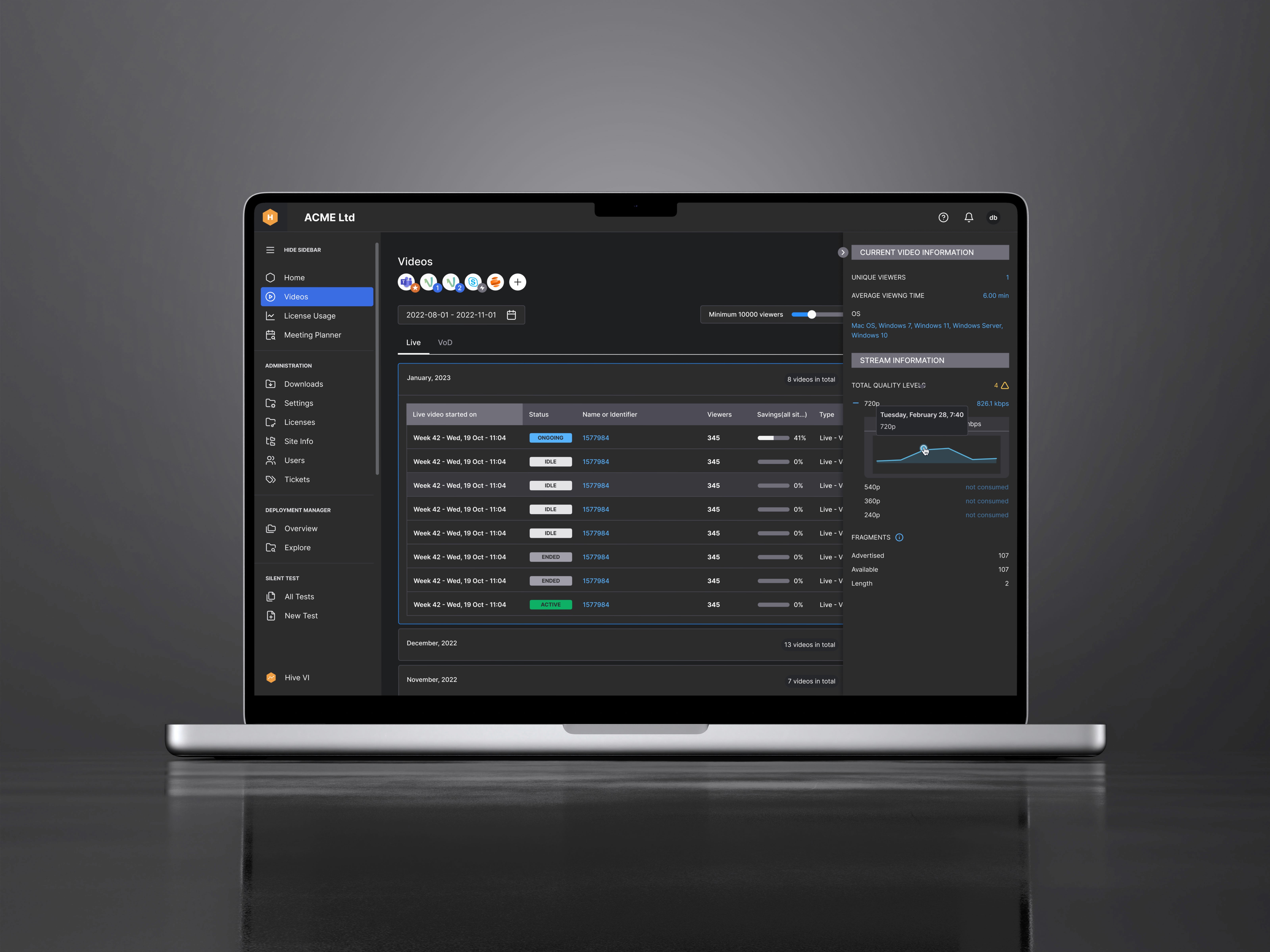
It was essential to establish a clear information architecture and core navigation model that guided users through the event lifecycle — from preparation to live management and post-event analysis — while providing both a holistic overview and the ability to drill down into details.
Design Process
I led the design transformation to align the platform with evolving user needs and business strategy. Working closely with product, engineering, and business stakeholders, I redefined key workflows and introduced more structured, scalable design practices.
I also mentored junior designers and implemented improved collaboration processes between design and development to increase efficiency and reduce design debt.
The process was collaborative and iterative:
Research: Interviews, analytics review, card sorting, and workshops
Ideation: Concept sketches, wireframes, and cross-functional discussions
Design: From low-fidelity wireframes to high-fidelity prototypes in Figma
Testing: Continuous user validation to inform and refine decisions
Handoff: Early and ongoing collaboration with engineering
Design was shared early and frequently to build alignment, demonstrate value, and increase UX awareness within an organization with limited design maturity.
A modular and accessible design system was introduced to ensure consistency, scalability, and compliance at the component level.
3. Solution & Results
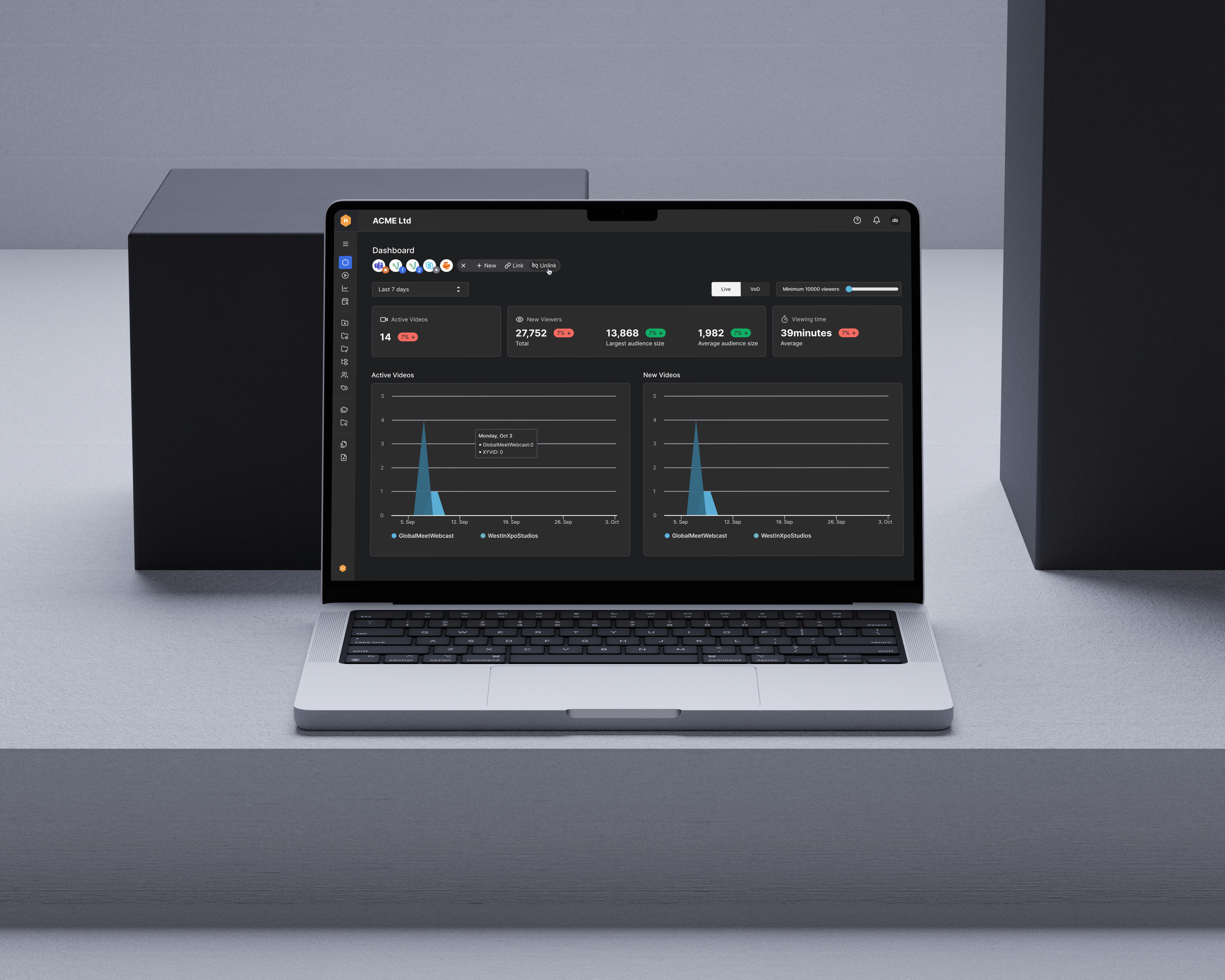
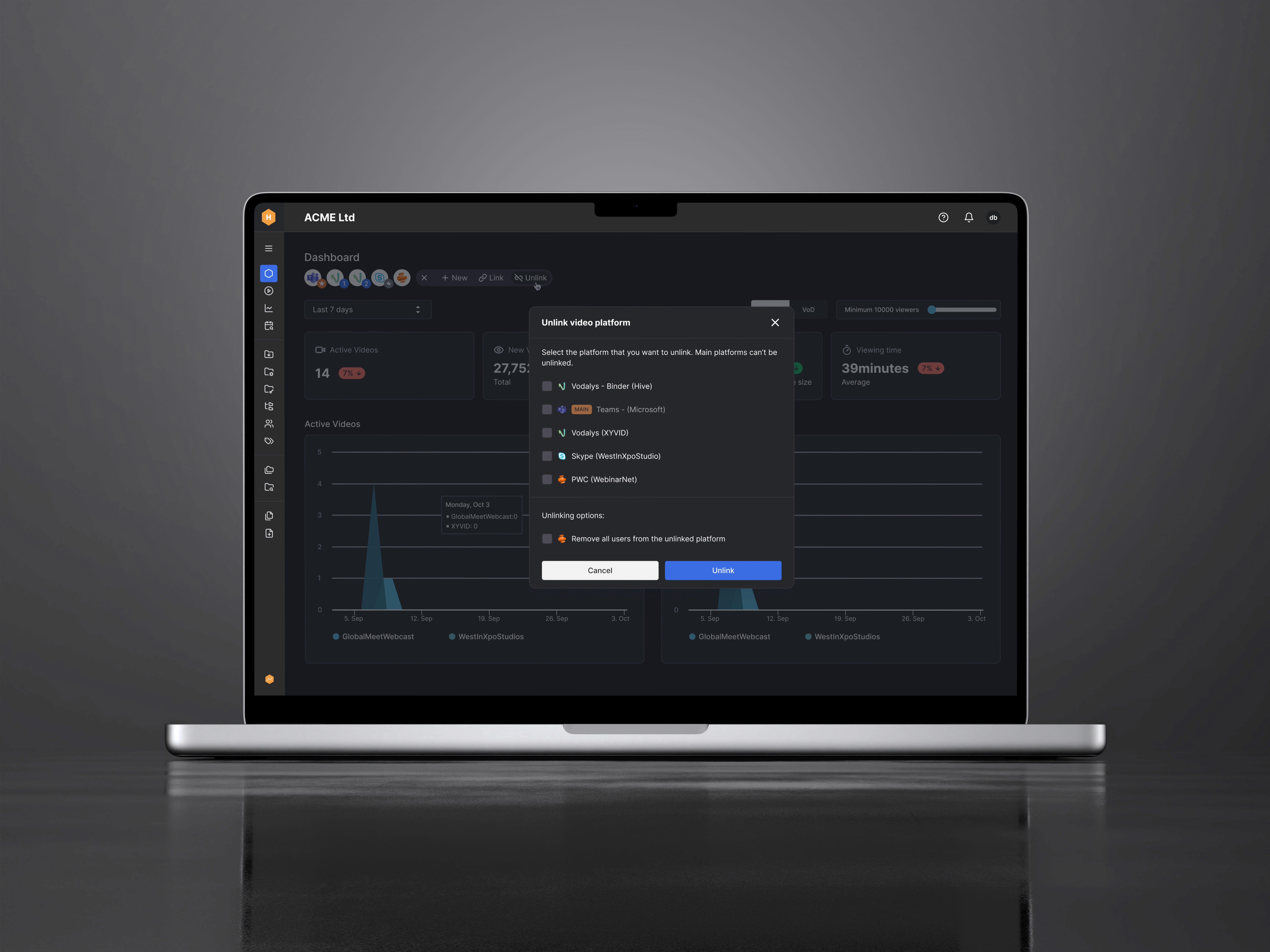
The redesigned platform delivered a significantly improved and more intuitive user experience. Navigation was streamlined, workflows were clarified, and analytics became actionable and easier to interpret across the event lifecycle.
Key outcomes included:
A modernized UI aligned with real user needs
Clear lifecycle-based event model supporting preparation, live management, and post-event analysis
Improved engagement with analytics and event management tools
Accessibility compliance, enabling collaboration with large enterprise clients
A scalable design system ensuring consistency and usability
Reduced design debt and improved cross-functional workflows
The new lifecycle-based structure created a more outcome-oriented experience, helping users transition seamlessly between stages while maintaining clarity and control.
3. Impact [TL;DR]
The redesigned platform strengthened Hive Streaming’s position as a leader in enterprise video intelligence. Clients now benefit from a cohesive, insight-driven experience that supports better decision-making before, during, and after events.
Improved usability, accessibility, and internal collaboration led to faster adoption, higher enterprise client satisfaction, and a more efficient product development process — establishing a strong foundation for continued growth and innovation.